I-35W and I-30 intersect at a dense system of ramps, merges, and elevated spans commonly called the Mixmaster. High volumes, short merge distances, and limited sight lines increase the risk of multi-vehicle collisions.
When three or more vehicles collide in quick succession, assigning fault becomes complex. When multiple insurance carriers review the same evidence, they may reach different conclusions about percentages of responsibility.
Bailey & Galyen has represented Fort Worth crash victims for over 40 years. Our Fort Worth car accident attorneys investigate impact sequences from accidents at the Mixmaster, analyze evidence from all parties, and fight for fair compensation for our clients.
Key Takeaways for I-35W Accident Cases in Fort Worth
- Multiple parties might share fault in Mixmaster pileups, with each driver's percentage of responsibility determined by their specific actions.
- The driver who causes the first collision doesn't always carry full blame. Subsequent drivers who fail to maintain safe distances or speeds bear their own liability when involved in a pileup.
- Texas follows modified comparative negligence, allowing recovery only if you're 50% or less at fault for causing injuries to another party.
- Evidence from traffic cameras, witnesses, and accident reconstruction proves critical in establishing each driver's role.
- Liability disputes across multiple parties can prolong the length of time it takes to resolve a claim unless there’s thorough evidence clarifying the impact sequence.
Why Chain Reaction Accidents Happen at the Mixmaster
The I-35W and I-30 interchange earned its "Mixmaster" nickname for good reason. This tangled web of ramps, merges, and tight curves creates conditions where one driver's sudden stop can ripple through traffic.
Heavy truck traffic rumbles through the Mixmaster on a daily basis, mixing with commuters rushing between downtown Fort Worth and surrounding communities. Sudden stops happen frequently as vehicles merge across multiple lanes over short distances. Limited sight lines around curves mean drivers often see brake lights too late.
Lane-Change Pressure at the Downtown Spokes
Multiple entry and exit ramps feed into the interchange within a compressed distance. Drivers switching lanes to reach their exit create lateral movement across the traffic flow. This weaving pattern increases collision risk when speeds vary dramatically between lanes.
Weather, Elevation, and Stopping Distance on Elevated Spans
Rain makes the elevated interchange slick; fog can reduce visibility to nearly zero; and ice can transform the concrete into a hazard zone. Elevated sections lack the drainage and traction of ground-level roadways, extending stopping distances when conditions deteriorate.
How Texas Law Determines Fault in Fort Worth I-35W Accident Pileups
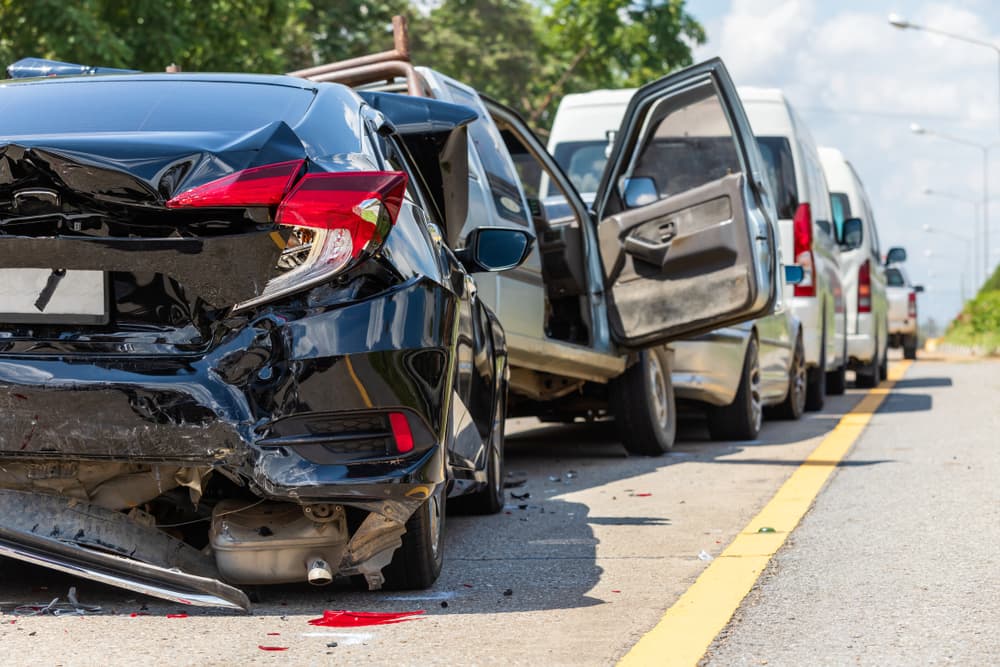
Texas operates under modified comparative negligence rules found in Texas Civil Practice and Remedies Code Section 33.001. This means that multiple drivers might share responsibility for a chain-reaction accident.
The Initial Impact
The driver who causes the first collision typically bears primary responsibility. Evidence of speeding, driving with road rage, following too closely, or unsafe lane changes that spark the chain reaction can establish who caused the first contact.
Subsequent Collisions
Each following driver has a duty to maintain a safe distance and control their vehicle. A driver who rear-ends the car in front of them during a pileup might share fault, even if they didn't start the chain reaction.
When Comparative Fault Reduces Recovery
Texas follows a comparative responsibility system, which means more than one person can share blame for the same accident. You can seek compensation for your injuries as long as you are not found more than 50% responsible for what happened. If a jury decides that you are 51% or more at fault, you will receive nothing. If you are found 50% or less at fault, your total compensation is reduced by your percentage of responsibility.
In a multi‑car accident, fault is rarely placed on just one driver. Instead, investigators and, if necessary, a jury look at how each driver’s actions contributed to the chain of events. This is especially common in large pileups involving several vehicles, such as accidents on busy highways like the I-35W and I-30 Mixmaster.
For example, in a five‑car pileup, one driver may have been following too closely, another may have changed lanes suddenly, and another may have been speeding or distracted. Each of those actions can contribute to the crash in different ways. Rather than assigning all the blame to a single driver, the jury can divide responsibility among multiple parties based on the evidence.
Evidence That Determines Liability in an I-35W Accident Fort Worth Case
Proving fault in a Fort Worth Mixmaster crash requires a thorough investigation. The chaotic nature of multi-car pileups means witness accounts often conflict, and drivers can remember events differently.
Critical evidence includes:
- Traffic Camera Footage: Cameras throughout the interchange show vehicle positions, speeds, and impact sequences.
- Police Accident Reports: Fort Worth Police Department documentation through their crash reports portal provides driver information, witness contacts, and initial assessments.
- Witness Statements: Other drivers, passengers, and bystanders offer perspectives on how the pileup unfolded.
- Vehicle Damage Patterns: Damage location and severity reveal collision order, speeds, and impact angles.
- Physical Evidence: Skid marks and debris at the scene show vehicle trajectories and braking distances.
Together, these sources let reconstruction experts model the impact sequence and allocate fault percentages across the involved parties.
Preserving Evidence: Camera Footage and Time-Sensitive Records
Footage from traffic monitoring systems may not be stored indefinitely. Time-sensitive preservation requests are common in multi-vehicle cases. Attorneys submit these requests promptly to secure video evidence before routine deletion cycles occur.
Commercial Vehicle Data: ELDs and Event Data Recorders
Modern vehicles and commercial trucks record speed, braking, and driving patterns before crashes. Electronic logging devices (ELDs) in commercial trucks show hours of service and potential fatigue factors. Event data recorders in passenger vehicles capture pre-crash seconds with precision.
Understanding Compensation in Chain Reaction Accidents

Multi-car pileups at the Mixmaster often result in serious injuries. Whiplash, back injuries, broken bones, and traumatic brain injuries are not uncommon when vehicles collide at highway speeds.
Your compensation in an I-35W accident Fort Worth case depends on several factors:
- Medical Expenses: Emergency treatment, hospitalization, surgery, physical therapy, and ongoing care
- Lost Wages: Time away from work during recovery and future earning capacity if injuries prevent returning to your job
- Vehicle Damage: Repair costs or total loss value when your vehicle is destroyed in the pileup
- Pain and Suffering: Physical pain, emotional distress, and life disruption caused by injuries
- Future Medical Needs: Ongoing treatment, therapy, or assistive devices required for years after the accident
Documentation of each category strengthens your claim across multiple insurance carriers when several parties share liability.
Taking Action After a Chain Reaction Accident in Fort Worth
The days and weeks following your accident are critical for your legal claim. You've already received initial medical care. Now focus on documentation and claim preparation.
Keep detailed records of all medical treatment, including follow-up appointments, physical therapy sessions, and prescription medications. Save every bill, receipt, and medical report you receive. These documents establish the full scope of your injuries.
Obtain the official police report from the Fort Worth Police Department. This report contains driver information, insurance details, and witness contact information you'll need later.
Maintain a recovery journal describing your pain levels, mobility limitations, and how injuries affect daily activities. Note which tasks you cannot perform and how family members assist you during recovery.
Photograph your injuries as they heal, showing bruising progression and visible trauma. Document vehicle damage from multiple angles before repairs begin.
Avoid discussing the accident on social media platforms. Insurance investigators review online activity and may use your posts to dispute injury severity.
Contact an experienced Fort Worth personal injury attorney before providing recorded statements to any insurance company or accepting settlement offers.
FAQ for Fort Worth I-35W Accident Cases
How Long Do I Have to File a Claim After a Mixmaster Accident?
Texas law provides two years from the accident date to file a personal injury lawsuit under Texas Civil Practice and Remedies Code Section 16.003. This deadline applies regardless of how many vehicles were involved. Missing this statute of limitations bars you from pursuing compensation through the courts.
What If I Was Partially at Fault for the Chain Reaction?
You might still recover compensation under Texas comparative negligence rules. As long as you're 50% or less responsible, you receive damages reduced by your percentage of fault. Your attorney will analyze the actions of all drivers and present evidence to minimize your percentage of fault.
How Do Lawyers Prove Fault in Multi-Car Pileups?
Attorneys combine traffic camera footage, witness statements, police reports, vehicle damage analysis, and expert accident reconstruction to model how the pileup unfolded. This investigation and analysis identify which drivers failed to maintain safe distances, speeds, or vehicle control.
Can I Pursue Compensation From Multiple Drivers?
Yes. When several drivers share fault for a chain reaction accident, you might file claims against each negligent party's insurance carrier. This approach proves necessary when one driver carries minimal coverage that is insufficient to address your losses fully.
Contact Bailey & Galyen About Your Fort Worth Mixmaster Accident
Chain reaction accidents at the I-35W and I-30 interchange can leave victims facing complex legal situations while recovering from serious injuries. Determining fault requires thorough investigation and experienced legal representation.

Bailey & Galyen has represented Fort Worth accident victims for over 40 years. Our attorneys investigate the sequence of impacts, allocate fault based on evidence, and pursue compensation consistent with your documented losses.
If you've been injured in a Fort Worth Mixmaster crash, contact Bailey & Galyen today for your free consultation. Call our Fort Worth office at (817) 438-2121 to discuss your chain reaction accident case with our personal injury attorneys.