Can You Get a DWI Without Driving in Texas?
Many people assume that a DWI charge applies only when a police officer sees someone driving down the road. Because of that, a person who has had too much to drink may decide to sleep in their vehicle instead of trying to drive home.
That may feel like the responsible choice. After all, the purpose of Texas DWI laws is to prevent impaired driving and keep dangerous drivers off the road. But Texas law is more complicated than many people realize. Under certain circumstances, you may be arrested and charged with a DWI even if your vehicle was parked when police arrived. This surprises many drivers who believed they were doing the right thing by staying off the road until they sobered up.
The reason comes down to how Texas law defines “operating” a motor vehicle. A vehicle does not necessarily need to be moving for you to be “operating” it. Officers and prosecutors may look at the surrounding facts to decide whether there is evidence that you operated the vehicle while intoxicated as prohibited under Texas law.
If you are asking, “Can you get a DWI without driving in Texas?”, the answer is yes, it is possible. Whether the charge can be proven depends on the evidence in the specific case.
Can You Be Charged If You’re Intoxicated in a Parked Car?
Yes, potentially. Many people are surprised to learn that a parked vehicle does not automatically prevent a DWI charge.The key question is not always whether the vehicle was moving when police arrived. The bigger issue is whether there is evidence that the person operated the vehicle while intoxicated. That evidence may be direct, such as an officer seeing the vehicle in motion, or circumstantial, such as the person’s location in the vehicle, whether the engine was running, where the vehicle was found, and whether witnesses saw the person driving earlier.
Because of this, parked-car DWI cases are often highly fact-specific. Two cases that look similar at first may have very different outcomes depending on the details.
What Does “Operating” a Vehicle Mean in a Texas DWI Case?
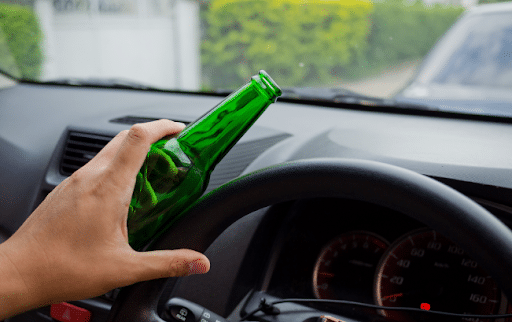
Texas law focuses on whether a person was operating a motor vehicle while intoxicated. That word, “operating,” matters.
In ordinary conversation, people often use “driving” to mean the vehicle was moving down the road. In DWI cases, however, prosecutors may argue that a person operated a vehicle if they exercised control over it in a way that could enable its use.
Courts may consider facts such as whether the engine was running, where the person was sitting, whether the keys were accessible, whether the vehicle appeared ready to be driven, and whether other evidence suggests recent operation. No single fact automatically decides the issue. Instead, courts generally look at the totality of the circumstances.
Potential Consequences of a DWI Conviction
A parked-car DWI case can carry the same kinds of consequences as other DWI cases. Depending on the facts, a conviction may lead to fines, court costs, driver’s license consequences, community supervision, alcohol education requirements, higher insurance costs, and a criminal record.
The possible penalties may also change if there are aggravating facts, such as a prior DWI, a high blood alcohol concentration, an accident, a child passenger, or other circumstances that affect how the case is charged. Because the consequences depend on the specific facts, a person facing a DWI charge should speak with an attorney about the case rather than assuming the outcome based only on where the vehicle was parked.
What Should You Do If Police Approach Your Vehicle?
If an officer approaches your parked vehicle, remain calm, follow lawful instructions, and avoid confrontational behavior. What you say during a DWI investigation may become part of the evidence, so it is usually wise to avoid volunteering unnecessary details about where you have been, how much alcohol you consumed, or whether you drove earlier.
This does not mean you should argue with the officer or refuse lawful commands. It means you should be careful about making statements that could be misunderstood or used against you later. If you are arrested or cited, an attorney can review the legality of the stop, the officer’s observations, any sobriety test results, and any evidence prosecutors claim shows that you operated the car while intoxicated.
Why Good Intentions Do Not Always Prevent a DWI Arrest
Many people arrested in parked-car DWI cases believed they were making the safest decision available. Instead of driving while impaired, they pulled over, stayed in a parking lot, or tried to sleep in the vehicle until they felt sober enough to leave. Those choices may show that the person was trying to avoid danger, but good intentions alone do not prevent an arrest.
From a law enforcement perspective, officers responding to a parked vehicle may not know whether the person recently drove while intoxicated, intended to drive moments later, or never operated the vehicle at all. That is why officers often look closely at the vehicle’s location, condition, and occupancy before deciding whether there is probable cause for a DWI arrest.
For example, a person asleep in a vehicle with the engine running may say the car was on only for heat or air conditioning. An officer may view those same facts as evidence that the person exercised control over the vehicle while intoxicated. A vehicle found far from the place where alcohol was consumed may also raise questions about how it got there.
Because these cases often rely on circumstantial evidence rather than direct observation, small details can become important. The stronger the timeline evidence is, the more likely prosecutors are to argue that the person operated the vehicle while intoxicated. The weaker or more uncertain the timeline is, the more room there may be to challenge the charge.
The Bottom Line
Many Texans believe they cannot face a DWI charge unless police catch them actively driving down the road. Unfortunately, that assumption can be costly.
Because Texas law focuses on whether a person “operated” a vehicle while intoxicated, officers and prosecutors may rely on circumstantial evidence when evaluating parked-car situations. Factors such as a running engine, vehicle location, witness statements, warm tires, and a person’s position inside the vehicle may all become relevant.
If you have consumed alcohol, avoiding driving remains the safest choice. However, understanding how Texas law applies to parked vehicles can help you make informed decisions and better protect yourself from unexpected legal complications.
Contact the Bailey & Galyen After a Parked-Car DWI Arrest in Texas
A DWI arrest can affect your driver’s license, job, criminal record, and future. If you were arrested after the police found you parked, sleeping in your vehicle, or sitting in a car that officers believe had been operated while you were intoxicated, you do not have to sort through the legal process alone.
Bailey & Galyen represents clients facing DWI charges throughout Texas. Our criminal defense attorneys can review what happened, evaluate the evidence, explain the legal process, and help you understand the options available in your case.
For an appointment with an experienced Texas DWI defense lawyer, contact Bailey & Galyen online or call 844-592-0436. We are available 24 hours a day, seven days a week.
Frequently Asked Questions
Can you get a DUI without driving in Texas?
Potentially, yes. Texas DWI law focuses on whether a person operated a motor vehicle while intoxicated. Prosecutors may rely on circumstantial evidence even if no officer or witness directly saw the vehicle moving.
Can you get a DWI while sleeping in your car?
It is possible, depending on the facts. A person asleep in a parked vehicle may still be investigated if officers believe there is evidence of vehicle operation, such as a running engine, the person’s position in the driver’s seat, the location of the vehicle, or other facts suggesting recent driving. The outcome depends on the facts and evidence available.
Does the vehicle have to be moving for a DWI charge?
Not necessarily. The issue is often whether prosecutors can establish the “operation” of the vehicle while intoxicated. A moving vehicle can provide direct evidence of driving, but Texas parked-car DWI cases often turn on whether prosecutors can prove operation through the surrounding circumstances. That is why details such as where the vehicle was parked, whether the engine was on, and how the person got there may matter.
Is a running engine enough for a DWI conviction?
A running engine can be an important fact, but it does not automatically decide the case. Courts generally look at all relevant evidence together. For example, the facts may be viewed differently if the person was using the heater in the parking lot than if the vehicle was stopped in a traffic lane with the driver behind the wheel.
Is sleeping in the back seat safer than the driver’s seat?
Sleeping in the back seat may create fewer facts suggesting immediate control of the vehicle. However, it does not guarantee that a DWI investigation or arrest will be avoided. Officers may still consider other evidence, such as whether the vehicle was recently driven, where the keys were located, and whether witnesses saw the person driving.
Can police arrest someone sitting in a parked car?
Yes. If officers believe the facts support a DWI investigation, they may take enforcement action, even when the vehicle is parked, based on the circumstances they observe. Whether the charge can be proven later depends on the evidence, the law, and the facts of the individual case.
Hablamos español en nuestra oficina.
Bailey & Galyen – Solving Your Legal Puzzle®